Why Cheap Sourcing Can Quietly Destroy Your Ecommerce Margins
When ecommerce brands look to improve profitability, the focus often falls on product costs, shipping rates, and advertising efficiency. But one of the biggest profit leaks hides elsewhere. It starts with sourcing decisions that appear cost-effective on paper but create operational problems that scale as order volume grows. At Vietnam Sourcing Co, we’ve seen many brands optimize for the wrong metrics and overlook this hidden profit leak. A supplier offering a lower unit cost may seem like a win today, but if that decision increases return rates, customer complaints, and support costs, the long-term impact on your bottom line can be significant.
Most Brands Are Solving the Wrong Problem
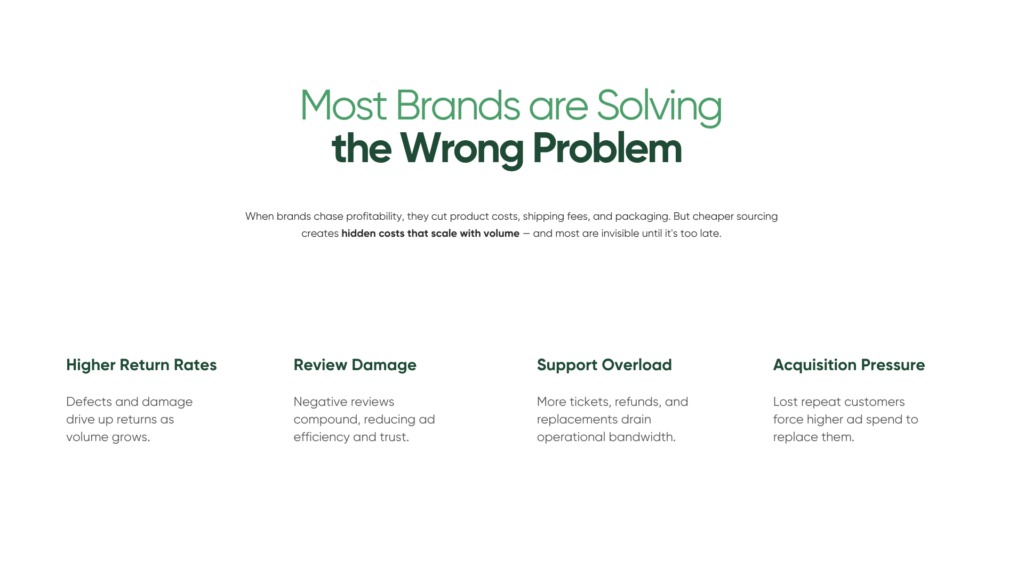
Many businesses spend months negotiating lower prices while overlooking the operational costs that affect profitability after the product reaches customers. These hidden costs often include:
- Higher return rates
- Negative product reviews
- Increased customer support workload
- Lower customer retention
- Reduced advertising efficiency
The reality is simple: A sourcing strategy should not only reduce costs. It should also reduce friction throughout the customer experience.
The $1 Mistake: A Massive Profit Leak That Costs Thousands
Small savings often create large problems. Common examples include:
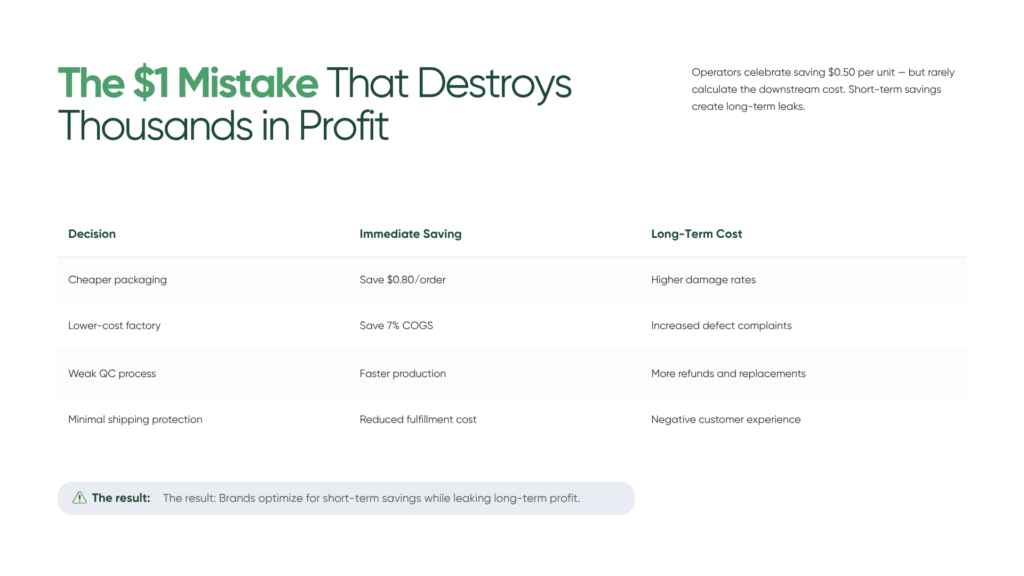
| Decision | Immediate Saving | Long-Term Cost |
|---|---|---|
| Cheaper packaging | Lower packaging cost | More product damage |
| Lower-cost factory | Reduced COGS | Higher defect rates |
| Weak QC process | Faster production | More returns and complaints |
| Reduced shipping protection | Lower freight costs | Poor customer experience |
The problem is not the individual decision. The problem is repeating those decisions at scale. As order volumes grow, small quality issues become expensive operational challenges.
Ecommerce Returns Are a Billion-Dollar Problem
Returns continue to be one of the largest profit leak problems for ecommerce businesses worldwide.
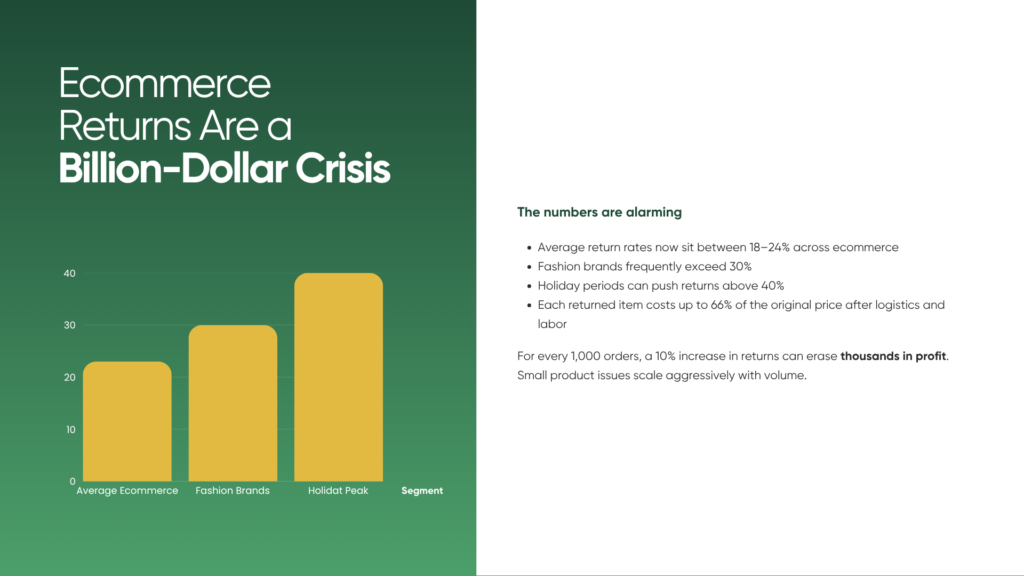
- Ecommerce return rates often range between 10% and 24%
- Fashion products frequently exceed 30%
- Peak holiday seasons can drive return rates even higher
- Each returned item creates additional logistics, labor, and inventory costs
For brands processing thousands of orders each month, even a small increase in return rates can eliminate significant profit. Reducing returns begins long before the product reaches the customer. It begins with sourcing, quality control, and packaging decisions.
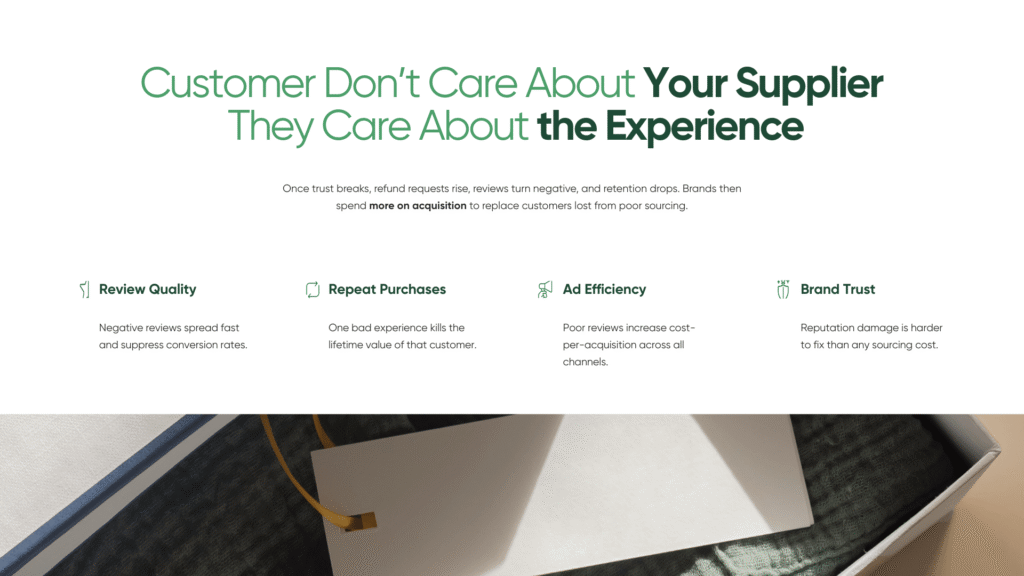
Customers Don’t Care About Your Supplier
They Care About the Experience. Customers rarely know which factory produced a product. What they remember is:
- Product quality
- Delivery experience
- Packaging condition
- Ease of use
- Brand reliability
When a product arrives damaged or fails to meet expectations, the customer does not blame the supplier. They blame the brand. Poor sourcing decisions directly impact your margins and trigger a continuous profit leak through:
- Review ratings
- Repeat purchases
- Brand trust
- Customer lifetime value
- Advertising performance
This is why sourcing should be viewed as a customer experience function, not simply a procurement activity.
The Packaging Problem Most Brands Underestimate
Packaging is often treated as an expense to minimize. In reality, packaging is one of the most important tools for protecting profit. Poor packaging can lead to:
- Product damage
- Increased returns
- Higher replacement costs
- Negative customer reviews
- Lost repeat purchases
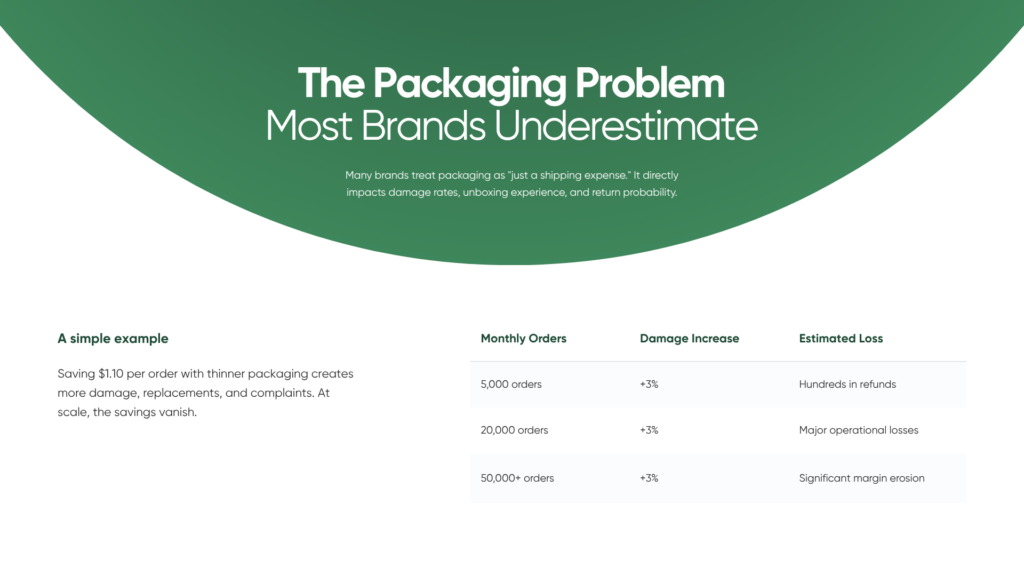
A small reduction in packaging cost may save a few cents per unit. However, the resulting increase in damage rates can create losses that far exceed the original savings. Smart brands evaluate packaging based on total cost impact, not unit cost alone.
Case Study: Protecting Product Integrity Through Better Sourcing
One example comes from Stockyard Beef, a premium Australian Wagyu brand. The challenge was not simply producing a quality product. The challenge was maintaining product quality throughout storage, transportation, and international distribution.
By focusing on:
- Packaging optimization
- Supplier coordination
- Consistent quality standards
- Supply chain visibility
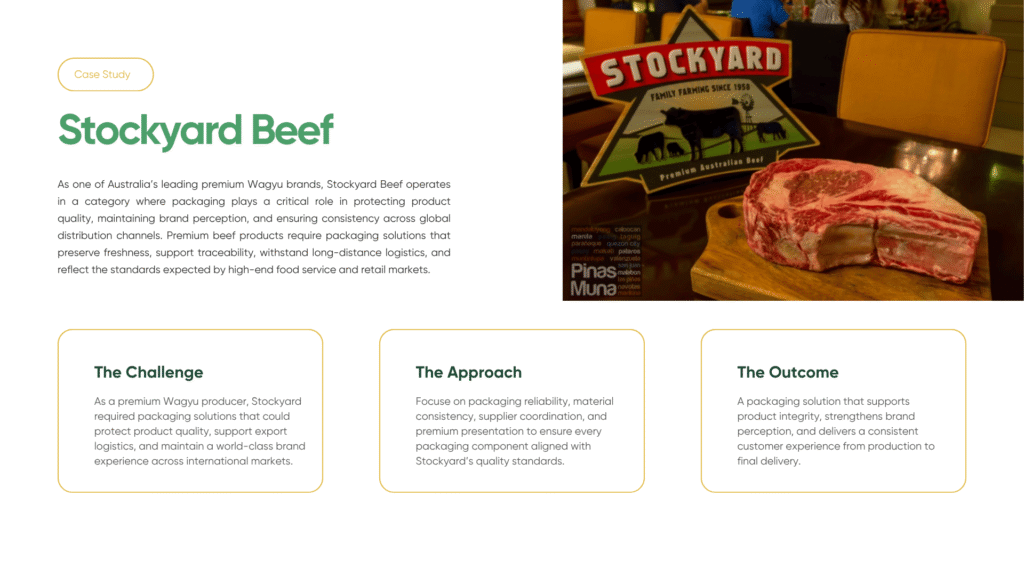
The brand was able to protect product integrity and deliver a better customer experience. This highlights an important principle: The product is only as strong as the supply chain supporting it.
Cheap Sourcing vs Scalable Sourcing
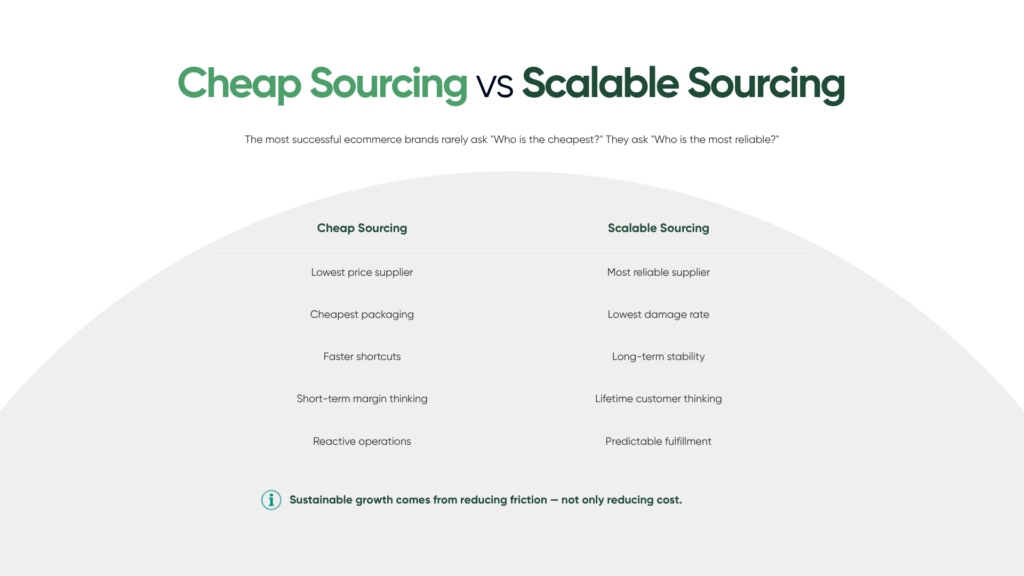
Many brands ask:
“Who is the cheapest supplier?”
The better question is:
“Who is the most reliable supplier?”
Cheap sourcing focuses on:
- Lowest price
- Short-term savings
- Reactive problem-solving
Scalable sourcing focuses on:
- Reliability
- Consistency
- Predictable fulfillment
- Long-term customer satisfaction
- Sustainable growth
The brands that scale successfully understand that sourcing is a strategic investment rather than a procurement exercise.
The True Cost of Bad Sourcing
The visible costs of sourcing are easy to calculate. The invisible costs, however, are often much larger and create a severe profit leak for your business. These hidden costs include:
- Product returns
- Customer support costs
- Lost repeat purchases
- Reduced customer trust
- Negative reviews
- Lower advertising efficiency
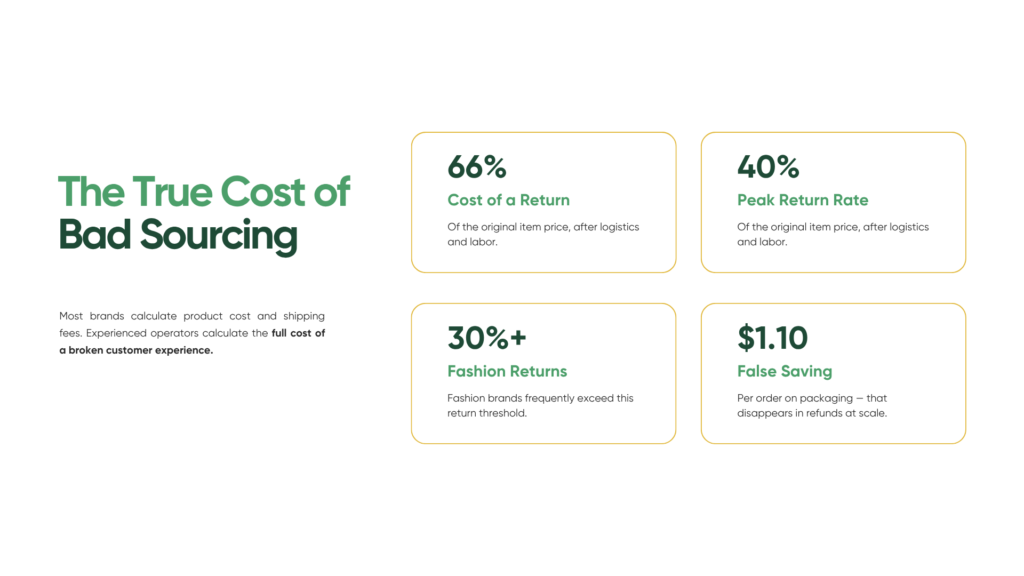
What appears to be a small cost reduction can quickly become a significant profit loss once operational costs are considered. The cheapest supplier is not always the most profitable supplier.
The Question That Changes Everything
Most sourcing conversations begin with:
“How can we reduce costs?”
Leading brands ask a different question:
“How can we improve profitability while protecting customer experience?”
That shift changes everything.
It encourages investment in:
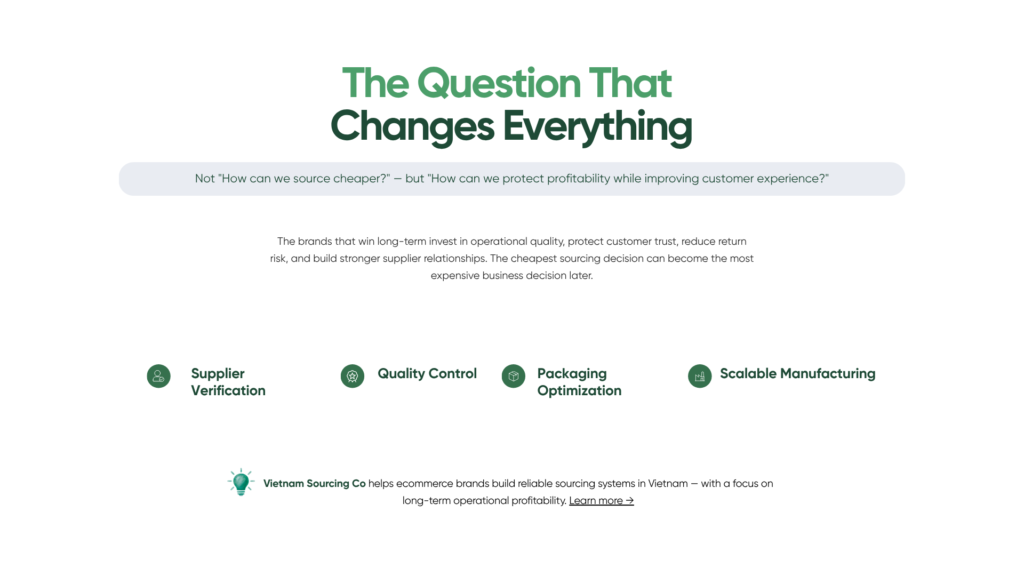
Supplier Verification
Working with trusted manufacturing partners.
Quality Control
Preventing defects before products reach customers.
Packaging Optimization
Reducing damage and improving delivery performance.
Scalable Manufacturing
Building systems that support long-term growth. These are the foundations of sustainable ecommerce success. By implementing these four pillars, your brand can effectively plug every hidden profit leak and build the foundations of sustainable ecommerce success.
Conclusion: Build for Long-Term Profitability
The hidden profit leak in ecommerce is rarely product cost. More often, it is the accumulation of small sourcing decisions that create operational friction, customer dissatisfaction, and higher return rates. Brands that win long-term focus on:
- Reliable suppliers
- Strong quality control systems
- Smart packaging strategies
- Scalable manufacturing partnerships
At Vietnam Sourcing Co, we help ecommerce brands build sourcing systems designed for sustainable growth, stronger margins, and better customer experience. Looking for reliable manufacturing and sourcing partners in Vietnam? Contact Vietnam Sourcing Co today to plug your hidden profit leak and discover how strategic sourcing through the OneLink Holdings network can improve profitability beyond simple cost reduction.